
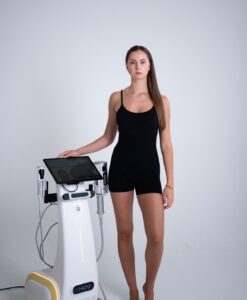
Body Contouring Equipment for Salons: 2025 Buyer’s Guide
The body contouring equipment market has exploded in recent years, with dozens of manufacturers offering systems at price points ranging from €10,000 to over €50,000. For salon owners and spa operators looking to add or upgrade body treatment services, navigating this complex landscape can be overwhelming.
This comprehensive buyer’s guide cuts through the marketing noise to help you understand the different technology types, evaluate true costs, calculate realistic ROI, and make an informed investment decision that aligns with your business goals.
Understanding Body Contouring Technologies
Modern body contouring equipment employs various technologies, each with distinct mechanisms, applications, and client experiences. Understanding these differences is essential for choosing the right system for your practice.
1. Radiofrequency (RF) Systems
How it works: RF energy heats deep tissue layers (dermis and subdermis) to 40-45°C, stimulating collagen production and causing fat cells to release their contents.
Best applications:
- Skin tightening and firming
- Mild to moderate cellulite reduction
- Body contouring with skin laxity concerns
- Post-weight loss skin tightening
- Face and neck treatments
Treatment experience: Clients feel warmth during treatment, generally described as comfortable. Session duration: 30-45 minutes per area.
Results timeline: Gradual improvement over 8-12 weeks as collagen remodeling occurs. Maintenance treatments recommended every 1-2 months.
Investment range: €15,000-€35,000
Typical pricing: €120-€180 per session
2. Ultrasound Cavitation
How it works: Low-frequency ultrasound creates microscopic bubbles in fat tissue that disrupt fat cell membranes, releasing triglycerides that are then metabolized naturally.
Best applications:
- Localized fat reduction
- Circumference reduction
- Stubborn fat deposits
- Body reshaping
Treatment experience: Some clients hear a buzzing sound from the ultrasound. Sensation is generally mild. Session duration: 30-50 minutes.
Results timeline: Visible reduction after 3-6 treatments, with optimal results after 8-12 sessions.
Investment range: €8,000-€25,000
Typical pricing: €100-€150 per session
3. Cryolipolysis (Fat Freezing)
How it works: Controlled cooling crystallizes fat cells at temperatures that don’t damage surrounding tissue, triggering natural cell death and gradual elimination.
Best applications:
- Stubborn fat bulges (abdomen, flanks, thighs)
- Non-surgical fat reduction
- Clients seeking permanent fat cell elimination
- Spot reduction in specific areas
Treatment experience: Initial intense cold sensation that subsides as area becomes numb. Session duration: 45-90 minutes per applicator.
Results timeline: Results emerge over 8-12 weeks as treated fat cells are eliminated. 20-25% fat reduction in treated area typical.
Investment range: €25,000-€60,000
Typical pricing: €300-€600 per area
4. Roller Massage Systems
How it works: Motorized rollers, often combined with suction, mechanically manipulate tissue to stimulate lymphatic drainage, improve circulation, and break up fibrotic bands causing cellulite.
Best applications:
- Cellulite reduction (most effective technology for this)
- Lymphatic drainage
- Body contouring through fluid mobilization
- Skin texture improvement
- Post-surgical recovery
- Wellness and detoxification
Treatment experience: Similar to deep tissue massage, generally relaxing and comfortable. Session duration: 30-60 minutes.
Results timeline: Immediate visible improvement in skin texture, progressive cellulite reduction over 8-12 treatments.
Investment range: €15,000-€45,000
Typical pricing: €120-€180 per session
5. EMS (Electrical Muscle Stimulation)
How it works: Electrical impulses trigger muscle contractions, simulating intensive exercise to build muscle tone and burn fat through increased metabolic activity.
Best applications:
- Muscle toning and definition
- Abdominal strengthening
- Buttock lifting
- Combining with fat reduction for body sculpting
Treatment experience: Intense muscle contractions during treatment. Not painful but requires adaptation. Session duration: 20-30 minutes.
Results timeline: Visible muscle tone improvement after 4-6 treatments, optimal results after 8-10 sessions.
Investment range: €15,000-€30,000
Typical pricing: €150-€250 per session
6. Combination Devices
Many modern systems combine multiple technologies (e.g., RF + roller massage, ultrasound + RF, EMS + RF) to address multiple concerns simultaneously and enhance results.
Advantages:
- Comprehensive treatment approach
- Potentially faster and better results
- Ability to customize based on client needs
- Higher perceived value justifying premium pricing
Investment range: €20,000-€50,000
Technology Comparison Matrix
| Technology | Best For | Price Range | Session Time | Results Timeline | Client Comfort |
|---|---|---|---|---|---|
| RF Systems | Skin tightening | €15-35K | 30-45 min | 8-12 weeks | Comfortable warmth |
| Ultrasound | Fat reduction | €8-25K | 30-50 min | 6-10 weeks | Mild sensation |
| Cryolipolysis | Stubborn fat | €25-60K | 45-90 min | 8-12 weeks | Initial discomfort |
| Roller Massage | Cellulite/drainage | €15-45K | 30-60 min | 4-8 weeks | Relaxing massage |
| EMS | Muscle toning | €15-30K | 20-30 min | 4-8 weeks | Intense but tolerable |
What to Consider When Buying Equipment
1. Your Target Market and Client Needs
Different technologies appeal to different client demographics:
- Cellulite concerns: Roller massage systems most effective
- Fat reduction focus: Cryolipolysis or ultrasound cavitation
- Skin tightening priority: RF systems
- Athletic/muscle toning: EMS technology
- General wellness/detox: Lymphatic drainage systems
- Post-surgical recovery: Gentle roller massage systems
Survey your existing clients or research your local market to understand primary demand. Don’t buy based on what seems exciting—buy based on what your clients will actually pay for repeatedly.
2. Price Ranges and Investment Levels
Body contouring equipment spans an enormous price range. Understanding what drives these differences helps you evaluate value:
Entry Level (€8,000-€15,000):
- Single technology systems
- Basic digital controls
- Limited treatment head options
- Standard warranty (1 year)
- Basic training included
- Best for: Testing the market, budget-conscious starts
Mid-Range (€15,000-€30,000):
- Advanced single or dual technology
- Sophisticated controls and programs
- Multiple treatment heads/applicators
- Extended warranty (2 years)
- Comprehensive training
- Best for: Serious body treatment practice, growing salons
Premium (€30,000-€50,000+):
- Multi-technology combination systems
- Premium brand positioning
- Extensive marketing support
- White-glove service and support
- Luxury aesthetics
- Best for: High-end spas, medical practices, flagship locations
3. Realistic ROI Calculation
Equipment is an investment that must generate profitable returns. Here’s how to calculate your specific ROI:
Variables to Consider:
- Equipment cost: Purchase price plus delivery and installation
- Financing costs: Interest if not paying cash
- Treatment pricing: What can you realistically charge in your market?
- Utilization rate: How many treatments per week can you book?
- Operating costs: Consumables, electricity, maintenance
- Labor costs: Therapist time (or is this absorbed by existing staff?)
Example ROI Calculation:
Scenario: €18,000 equipment investment
- Treatment price: €150 per session
- Package price: €1,350 for 10 sessions (10% discount)
- Target treatments: 15 per week (3 per day, 5 days)
- Operating cost: €5 per treatment (gel, laundry, utilities)
Monthly Revenue: 15 treatments × 4.3 weeks × €150 = €9,675
Monthly Operating Costs: 15 × 4.3 × €5 = €322
Monthly Net Revenue: €9,353
Break-Even: €18,000 ÷ €9,353 = 1.9 months
Year 1 Profit: (€9,353 × 12) – €18,000 = €94,236
This scenario assumes moderate utilization. Increase to 25 treatments per week and profit jumps to over €160,000 in year one.
4. Financing Options
How you pay for equipment significantly impacts cash flow and profitability:
Cash Purchase:
- Pros: No interest costs, immediate ownership, full tax deduction (check local regulations)
- Cons: Large capital outlay, opportunity cost of tied-up cash
- Best for: Established businesses with strong cash reserves
Equipment Financing:
- Pros: Preserve working capital, predictable monthly payments, potential tax advantages
- Cons: Interest costs, longer payback period, credit requirements
- Typical terms: 3-5 years at 5-12% APR
- Best for: New businesses, expansion mode, preserving cash for marketing
Vendor Financing:
- Pros: Often lower rates than traditional financing, faster approval, sometimes 0% promotional periods
- Cons: May be limited to specific brands or vendors
- Best for: Startups, businesses with limited credit history
Leasing:
- Pros: Lower monthly payments, upgrade flexibility, potential tax benefits, preserve credit lines
- Cons: Don’t own equipment, ongoing payments, may pay more long-term
- Best for: Testing market, frequently upgrading technology, managing cash flow
5. Training and Support Requirements
Equipment is only as effective as the operators using it. Evaluate:
Initial Training:
- How many hours of training are included?
- Is training on-site or do you travel?
- How many staff can be trained?
- Is certification provided?
- What treatment protocols are taught?
Ongoing Support:
- Technical support availability (hours, response time)
- Is support toll-free or included, or paid per incident?
- Are there user forums or communities?
- What continuing education is available?
- Are software updates included?
Protocol Development:
- Does the vendor provide evidence-based protocols?
- Are there pre-programmed treatments?
- Can you customize and save protocols?
- Is there clinical evidence supporting the protocols?
6. Warranty and Maintenance
Equipment failure can be catastrophic for your business. Understand what’s covered:
Standard Warranties:
- 1-3 years typical
- Usually covers parts and labor for manufacturing defects
- May have different coverage for different components
- Often requires annual certified service to remain valid
Extended Warranties or Service Contracts:
- Cost: Typically €500-€2,000 per year
- Coverage varies widely—read carefully
- Value: Calculate based on risk and service history
- Consider: Equipment complexity, usage intensity, technician availability in your area
Consumables and Ongoing Costs:
- Treatment gels, oils, or serums
- Applicator covers or disposables
- Replacement treatment heads (wear items)
- Software updates (free or paid?)
- Calibration and preventive maintenance
These ongoing costs can add up. A system with higher upfront cost but lower ongoing costs may actually be more economical long-term.
Questions to Ask During Equipment Demos
Don’t rely solely on sales presentations. Ask these critical questions:
Technology and Efficacy
- What peer-reviewed clinical studies support this technology?
- Can you provide before and after photos from actual users, not just marketing materials?
- What results can clients realistically expect after a full course of treatment?
- What is the mechanism of action? (Ask them to explain in detail)
- Are there any contraindications or client types who shouldn’t use this?
Business and Financial
- What is the total cost including delivery, installation, and training?
- What financing options are available and at what rates?
- What are the ongoing costs (consumables, service, etc.)?
- What is the expected service life of the equipment?
- What is the resale value after 3-5 years?
Support and Training
- How many hours of training are included and where?
- Can additional staff be trained later at no charge?
- What are technical support hours and response times?
- Where is the nearest authorized service technician?
- How long is typical repair turnaround?
Company and Reputation
- How long has your company been in business?
- How many of these units have you sold and installed?
- Can you provide references from similar practices?
- What is your service and support infrastructure?
- Are you the manufacturer or distributor?
Red Flags to Watch For
Avoid suppliers who:
- Make unrealistic claims (“Lose 10 cm in one session!”)
- Pressure you to buy immediately with “limited time” offers
- Can’t provide clinical evidence or actual user references
- Have very short warranties compared to competitors
- Require expensive mandatory service contracts
- Don’t have local service or support infrastructure
- Won’t allow you to demo the equipment before purchase
- Have predominantly negative online reviews (research thoroughly)
Making Your Decision
After researching options and attending demos:
Step 1: Narrow to Top 3 Choices
Based on:
- Technology fit for your target market
- Budget alignment
- Company reputation and support
- Your gut feeling about client appeal
Step 2: Request Written Quotes
Get everything in writing:
- Total cost breakdown
- What’s included (training, consumables, etc.)
- Warranty terms in detail
- Financing options with full terms
- Delivery timeline
Step 3: Check References
Contact actual users:
- Ask about real-world performance
- Inquire about company support quality
- Question about any surprises or hidden costs
- Find out about reliability and downtime
Step 4: Calculate YOUR Specific ROI
Use realistic numbers for your market:
- Your actual treatment pricing potential
- Conservative utilization estimates
- All costs included
- Determine acceptable break-even timeline
Step 5: Negotiate
Everything is potentially negotiable:
- Purchase price (especially for cash payment)
- Included consumables or accessories
- Extended warranty at no charge
- Additional training sessions
- Marketing support or materials
- Payment terms or financing rates
Step 6: Start with Conservative Plan
Don’t overextend:
- Buy based on proven demand, not hoped-for growth
- Ensure you can afford payments from existing revenue if new service is slow to build
- Have working capital for marketing the new service
- Plan for 3-6 month ramp-up period
Key Takeaways
- Multiple proven technologies exist for body contouring, each with specific strengths and applications
- Equipment investment ranges from €8,000 to €50,000+, with the sweet spot at €15,000-€30,000 for most practices
- ROI can be excellent (break-even in 2-6 months) with proper utilization and pricing
- Technology differences within same category are often minimal—focus on business factors
- Training, support, and warranty are as important as the technology itself
- Demo multiple systems before deciding
- Calculate ROI based on YOUR market realities, not supplier projections
- Start conservatively and expand based on proven demand
Conclusion
Investing in body contouring equipment represents a significant business decision with substantial profit potential. By understanding the technology options, evaluating suppliers thoroughly, calculating realistic ROI, and choosing equipment aligned with your market and business model, you can make a confident decision that drives growth and profitability.
Take the time to research thoroughly, demo multiple options, check references, and run the numbers carefully. The right equipment, properly marketed and skillfully operated, can transform your business and deliver exceptional value for both you and your clients.
Ready to explore your options? Request demonstrations from 3-5 suppliers, bring your team, test the equipment hands-on, and make a data-driven decision. Your future profits depend on choosing wisely today.

If you’re ready to move on from outdated, overpriced systems and embrace a more advanced, flexible solution, Luskine Body Pro is the upgrade your business needs.


