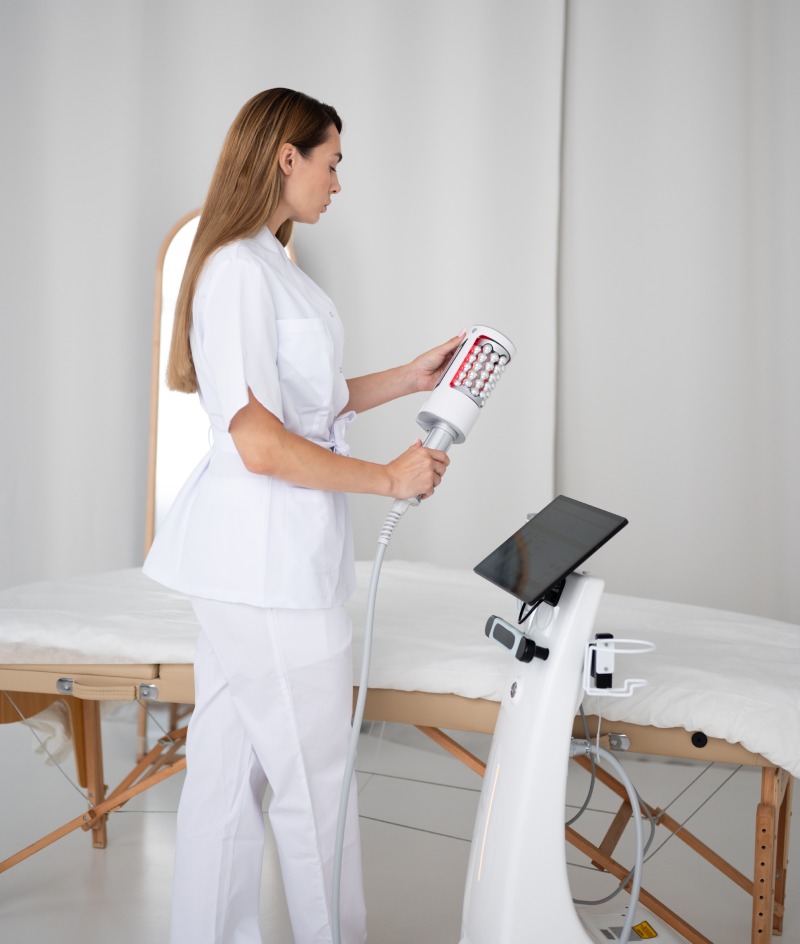
Most salon owners price body contouring the same way they price a facial: one session, one invoice, done. That's leaving money on the table — and worse, it sets the wrong expectation with clients who then feel disappointed after a single visit doesn't reshape their body overnight.
Body contouring isn't a single-session service. It's a protocol. And once you structure your offering around that fact, it stops behaving like a one-off purchase and starts behaving like a subscription — predictable, recurring, and compounding month over month.
Why one session was never going to be enough
Mechanical lymphatic drainage and roller-based body contouring work by stimulating circulation, encouraging fluid movement, and applying repeated mechanical pressure to target areas over multiple sessions. A single session can leave a client feeling lighter and looking a little tighter immediately after — but the compounding, visible results that keep clients talking about your salon come from a full course, typically spaced one to two sessions per week over four to eight weeks.
That's not a sales tactic. It's simply how the body responds to this kind of mechanical stimulation. Explaining this clearly, up front, is what turns a curious first-time client into someone who books the full course instead of walking away confused after session one.
Structuring the protocol, not just the session
Instead of selling "a body contouring session," sell the protocol: a defined course of sessions with a start point, a realistic milestone at the midpoint, and a review at the end. This does three things for your business:
- It locks in future bookings. A client who buys into an 8-session course is already committed to sessions 2 through 8 before they leave session 1.
- It sets honest expectations. Clients who understand the timeline are far less likely to feel let down after one visit — which protects your reviews and referrals.
- It smooths your revenue. Instead of hoping for new walk-ins every week, you have a base of clients already scheduled weeks in advance.
Rather than a single per-session price, offer a package rate for a full course (e.g. 6 or 8 sessions) at a modest discount to the per-session rate. This rewards commitment, reduces no-shows on later sessions, and gives you predictable cash flow up front.
The device side of the equation
Not every device is built for a repeat-session business model. The Luskine Body Pro, for example, ships with dedicated body and face handles and runs at a fixed 900 RPM rotation speed — consistent output session after session, which matters when you're asking a client to commit to two months of visits and expecting a consistent experience each time. An AI-connected tablet also means the same client history and treatment notes are available to any therapist on your team, so the protocol doesn't fall apart if one staff member is off that week.
Turning course-completers into repeat clients
The course doesn't have to end the relationship. Once a client finishes their initial protocol, a simple monthly maintenance session keeps results stable and keeps them in your calendar. This is where the real recurring revenue compounds: the acquisition cost of that client has already been paid back during the initial course, and every maintenance visit afterwards is close to pure margin.
What this looks like in practice
A salon running one body contouring device at four sessions a day, five days a week, with clients on 6-to-8 session packages, will typically see its calendar filling out two to three weeks in advance within the first couple of months — simply because each new client who starts a course is already booked for the next month and a half. That's the compounding effect: predictable, visible in your calendar, and far more resilient than relying on new walk-ins each week.