The Fitzpatrick scale, first published in 1975, classifies skin into six types based on how it responds to UV exposure — from Type I (very fair, always burns) to Type VI (deeply pigmented, never burns). For laser hair removal practitioners, it's the foundation for setting safe, effective treatment parameters.
Why skin type matters for laser settings
Laser hair removal works by targeting melanin — the pigment in hair follicles. The challenge is that melanin is also present in the surrounding skin, and the more pigmented the skin, the more careful the practitioner needs to be to avoid absorbing energy in the skin itself rather than the follicle. This is why fluence (energy density), pulse width, and cooling all need adjusting based on a client's skin type.
The six types, briefly
- Type I–II (very fair to fair): Highest melanin contrast between skin and hair, generally the most straightforward to treat, though care is needed with very fine or light hair, which has less melanin for the laser to target.
- Type III–IV (medium to olive): The most common range seen in most European client bases, with a wide comfortable margin for standard protocol settings.
- Type V–VI (brown to deeply pigmented): Requires reduced fluence, extended pulse width, and robust cooling to protect the epidermis, since there's less contrast between the melanin in the skin and in the hair follicle.
Why wavelength selection matters
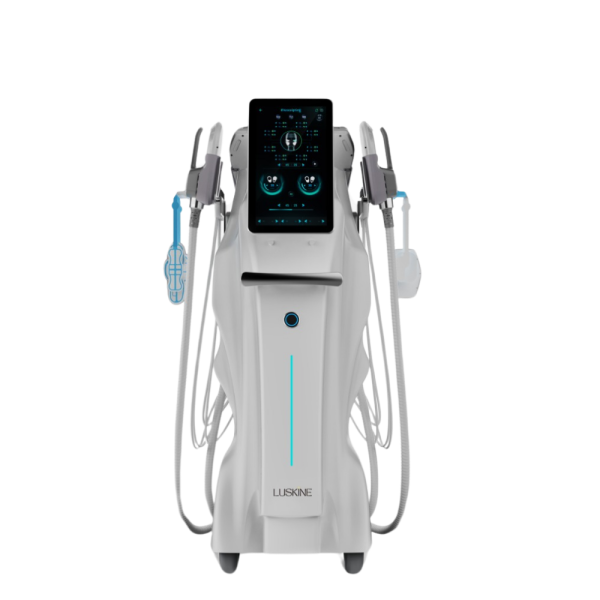
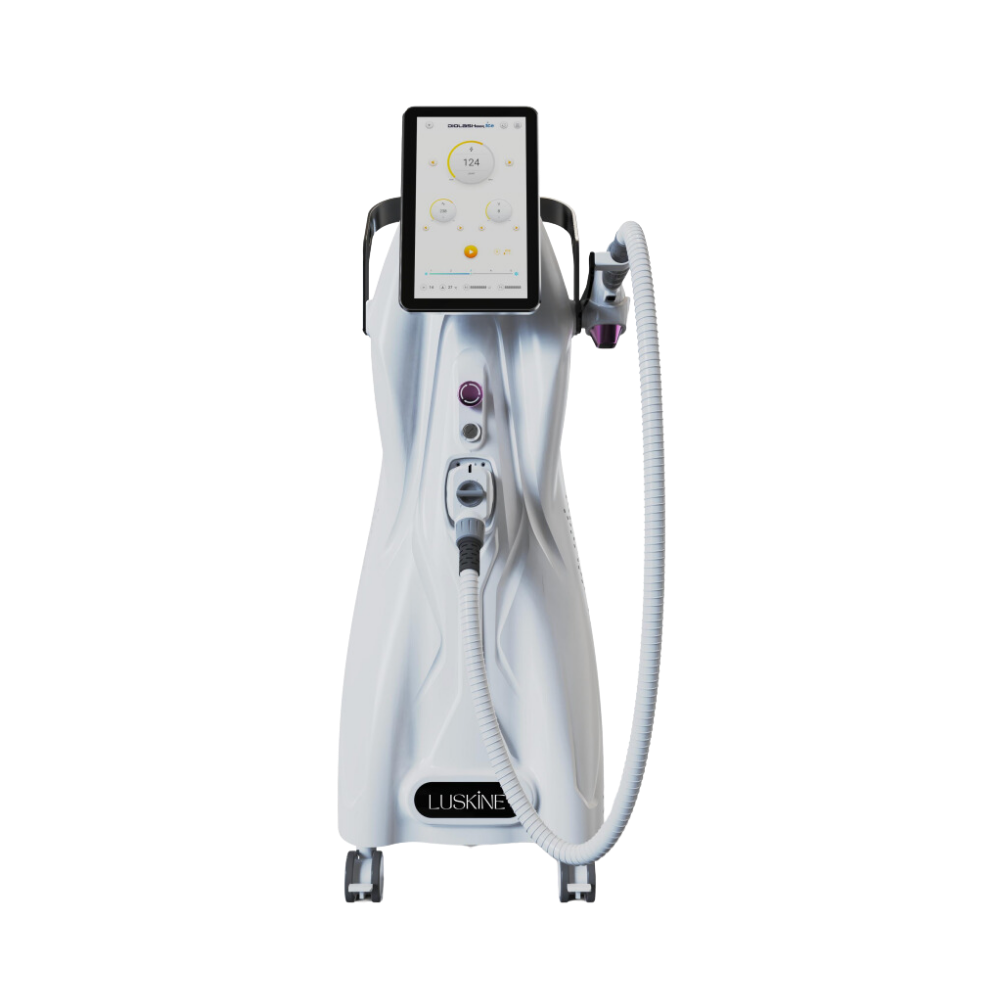
An 808nm diode laser — the wavelength used in the Luskine laser — is widely regarded as the most versatile single wavelength for hair removal, offering a good balance of follicle penetration depth and melanin selectivity across most skin types. Devices offering multiple wavelengths (755nm, 808nm, 940nm, 1064nm) give practitioners additional flexibility: shorter wavelengths for lighter, thinner hair, and longer wavelengths like 1064nm for deeper penetration with lower melanin absorption — useful for darker phototypes.
Active contact cooling at the treatment tip protects the epidermis during treatment, which is especially important across the full Fitzpatrick range. A device without reliable cooling limits which clients you can safely and comfortably treat.
Building this into your consultation
A brief, visible skin assessment as part of every first consultation — not just asking "how does your skin react to sun" but actually looking at it against the Fitzpatrick reference points — lets you set the right starting parameters and explain to the client why their protocol may differ slightly from a friend's. This is also good practice for documentation and safety records.
Why this matters commercially, not just clinically
Salons that can confidently and safely treat the full Fitzpatrick range don't need to refer any client elsewhere or turn away business based on skin tone — which matters in increasingly diverse client markets. Being the salon that treats everyone safely, rather than only lighter skin types, is a genuine competitive advantage in most cities.