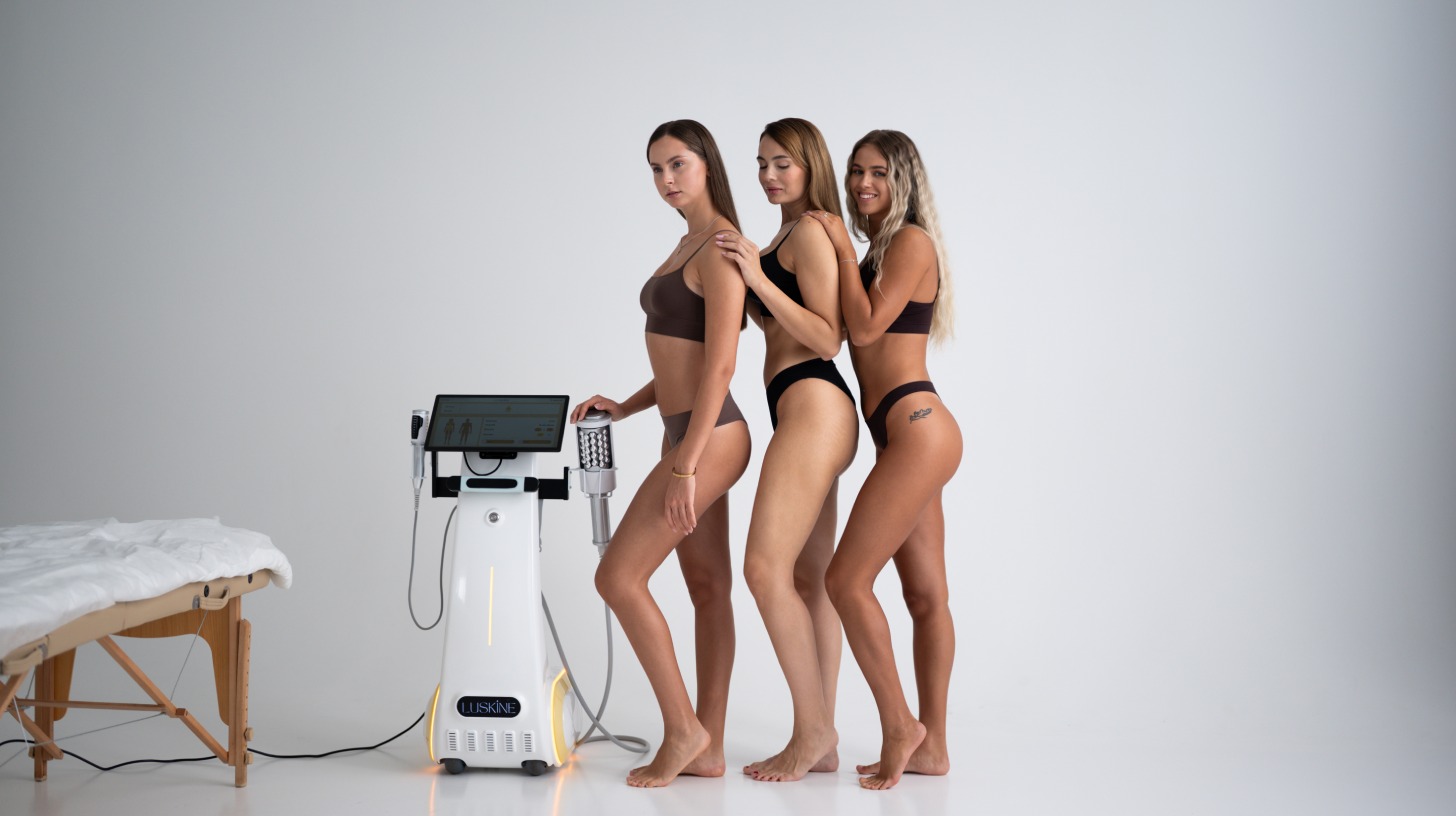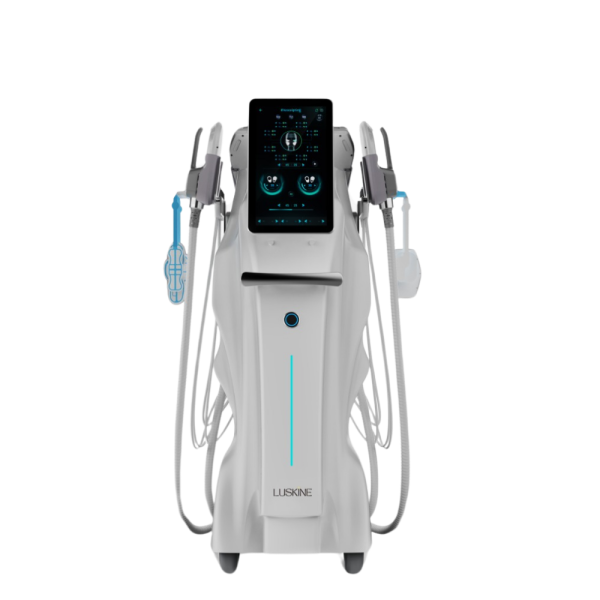
Muscle sculpting devices get marketed with a lot of acronyms — HIFEM, EMS, RF — often without much explanation of what each one actually does. If you're selling this treatment on your menu, understanding the difference matters, because clients increasingly ask, and a confident, accurate answer builds far more trust than a vague one.
EMS: the foundation
Electrical Muscle Stimulation (EMS) uses electrical impulses to trigger involuntary muscle contractions. It's the underlying principle behind most muscle-toning devices, including physiotherapy equipment that's been used for decades. A well-designed EMS device delivers a biphasic symmetrical waveform — equal positive and negative phases — which is gentler on tissue than older monophasic designs and allows for longer sessions without discomfort escalating.
HIFEM: EMS at higher intensity
High-Intensity Focused Electromagnetic (HIFEM) technology is a more powerful application of the same underlying principle — using focused electromagnetic fields to induce stronger, more consistent muscle contractions than a client could typically achieve through voluntary exercise alone. This is the mechanism behind most professional-grade "muscle sculpting" devices marketed for body contouring.
RF: a different job entirely
Radiofrequency (RF) is not a muscle technology at all — it works on the skin and underlying tissue by generating gentle heat, which is associated with skin tightening effects. When a device combines EMS/HIFEM with RF, it's addressing two different things in the same session: muscle stimulation below the skin, and skin-tightening effects at the surface.
"The EMS part works your muscles the way exercise does, and the RF part gently warms the skin to support a firmer look — together they address two different layers in the same session."
Why frequency range matters
Devices with an adjustable frequency range (typically 1–50 Hz on professional equipment) allow the operator to match the stimulation to the treatment goal — lower frequencies for muscle re-education, higher frequencies for endurance-style toning. A device locked to a single fixed frequency has far less flexibility to tailor a protocol to different clients or treatment areas.
What this means for your consultation conversation
Clients don't need a physiology lecture — but a therapist who can explain, in plain terms, what's actually happening during the session builds far more confidence than one repeating marketing phrases. Understanding the real distinction between EMS, HIFEM, and RF lets you answer follow-up questions honestly, set realistic expectations about session count, and avoid overpromising results that the technology isn't designed to deliver on its own.